Lutein & Zeaxanthin for Eye Health: Beginner Guide
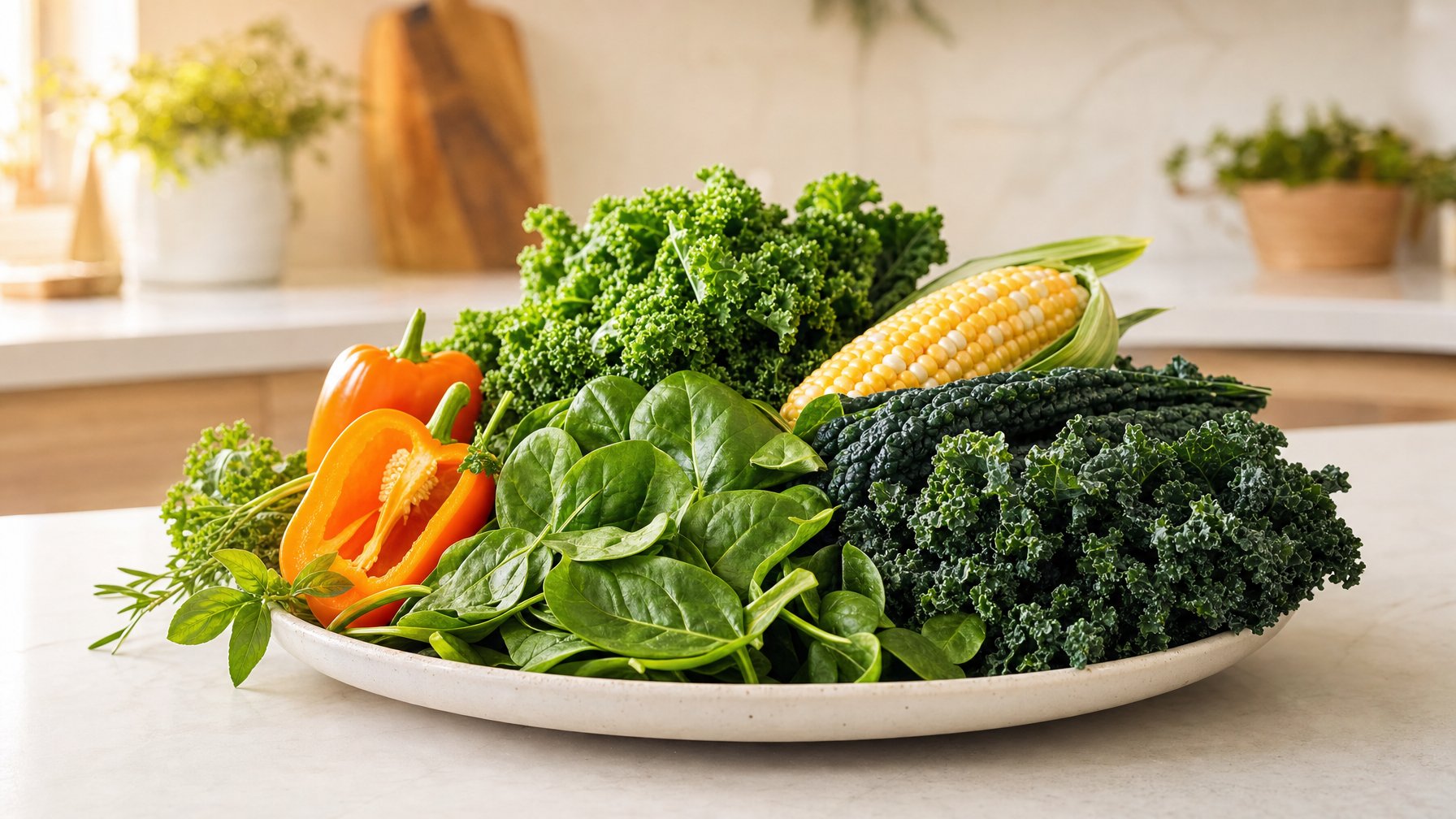
The human eye concentrates two plant pigments in a spot smaller than a pencil eraser. Lutein and zeaxanthin travel from spinach, kale, and egg yolks into the center of the retina, where they form a yellow filter called macular pigment.
No other dietary carotenoid is deposited there in meaningful amounts, and the body cannot manufacture either compound on its own.
That biology explains why eye nutrition keeps circling back to leafy greens. Most Americans take in only 1 to 2 mg of these carotenoids daily, according to a widely cited review of lutein and zeaxanthin dosages and food sources, while research protocols have used 10 mg of lutein and 2 mg of zeaxanthin.
Interest in lutein and zeaxanthin for eye health comes down to one practical question: whether a person’s plate already supplies enough, or whether a clinician-guided supplement makes sense for their specific situation. The answer depends on diet, age, and eye exam findings, all of which an eye doctor can assess directly.
Key Takeaways
- These two carotenoids build the macular pigment that filters high-energy blue light and buffers oxidative stress in central vision.
- Dark leafy greens, corn, peas, and egg yolks supply both compounds, and a little dietary fat improves absorption.
- Supplement decisions, especially anything modeled on AREDS2, belong in a conversation with an eye doctor rather than a self-directed experiment.
How These Carotenoids Support the Macula
Lutein and zeaxanthin accumulate in the retina, where they absorb short-wavelength light and neutralize free radicals before those reactive molecules damage delicate photoreceptor cells. Their concentration in that tissue can be measured as macular pigment optical density, or MPOD, and higher MPOD has been linked in research to better contrast sensitivity, faster photostress recovery, and improved visual processing speed.
Why the Macula Matters for Central Vision
The macula is the small central region of the retina responsible for reading, recognizing faces, and every task that requires fine detail. At its very center sits the fovea, packed most densely with photoreceptors and carrying the sharpest visual acuity in the entire eye.
That density comes with exposure. The fovea receives the most focused light of any retinal tissue, and its photoreceptor cells have high metabolic demand, which generates oxidative byproducts continuously.
Xanthophyll carotenoids sit directly in front of those cells. The pigment layer acts as an optical filter for the light that reaches them.
Macular Pigment, Blue Light, and Oxidative Stress
Macular pigment does two distinct jobs. It absorbs high-energy blue light before that light reaches the photoreceptors, and it functions as an antioxidant inside the tissue itself.
Both mechanisms appear in the photobiology literature on lutein and zeaxanthin in the eye, which describes age- and diet-related loss of these carotenoids as a factor that increases phototoxic damage. The lens absorbs most ultraviolet rays, so eye protection at the retina centers on the blue end of the visible spectrum.
Denser pigment also reduces glare sensitivity by scattering less light within the eye. People with higher MPOD recover faster after a bright flash, a measurable outcome rather than a subjective impression.
Lutein vs. Zeaxanthin: Different Roles in the Retina
The two carotenoids distribute differently across the macula. Zeaxanthin dominates at the fovea, while lutein becomes the more abundant pigment toward the periphery of the macula.
A third compound, meso-zeaxanthin, forms in the retina itself and appears alongside the other two in the central region. The human macula lutea and eye lens are rich in all three, collectively described as macular xanthophylls.
- Lutein: Peak retinal location — Zeaxanthin: Peripheral macula — Col 3: Fovea (center)
- Lutein: Typical dietary ratio — Zeaxanthin: ~5:1 higher — Col 3: Lower
- Lutein: Richest food sources — Zeaxanthin: Dark leafy greens — Col 3: Corn, peppers, goji berries
- Lutein: Amount used in AREDS2 — Zeaxanthin: 10 mg — Col 3: 2 mg
Diet supplies lutein at roughly five times the level of zeaxanthin, which is why green vegetables dominate food-source lists while yellow and orange produce carries relatively more zeaxanthin.
Food vs. Supplements: What the Evidence Means
Whole foods deliver both carotenoids in amounts that can rival supplement doses, and cooked greens with a fat source absorb well. Supplements enter the picture mainly for people whose eye doctor has identified a specific clinical reason, since the landmark trial behind most eye formulas studied a narrow population.
Which Foods Provide Lutein and Zeaxanthin?
Dark leafy greens sit at the top of every food ranking. Spinach delivers about 7,450 mcg of lutein per 100 g, with lutein and zeaxanthin together reaching roughly 7,920 mcg per 100 g.
Cooked kale, cooked spinach, collard greens, turnip greens, and mustard greens form the highest tier. Broccoli, brussels sprouts, peas, sweet yellow corn, summer squash, pumpkin, avocados, and red peppers contribute meaningful amounts.
Yellow vegetables and certain fruits and vegetables add zeaxanthin specifically. Goji berries rank among the densest zeaxanthin sources, and citrus fruits contribute smaller quantities.
Eggs deserve separate mention. Egg yolks contain modest total lutein, yet that lutein is highly bioavailable because it arrives packaged with fat and phospholipids.
How Cooking and Dietary Fat Affect Bioavailability
Both carotenoids are fat-soluble, so absorption climbs when they are eaten with oil, avocado, nuts, or egg yolk. A salad of raw spinach with a fat-free dressing gives up much of its potential.
Light cooking helps too. Heat breaks down plant cell walls in leafy green vegetables and releases the carotenoids bound inside, which is why cooked spinach and cooked kale test higher per serving than the same weight raw.
Chopping and sautéing greens in olive oil covers both variables at once. Extended boiling leaches some carotenoid content into the water, so steaming or a quick sauté preserves more.
What AREDS2 Does and Does Not Mean for AMD
AREDS2, the Age-Related Eye Disease Study 2 run by the National Eye Institute and published in JAMA in 2013, enrolled 4,203 participants who already had intermediate or advanced age-related macular degeneration. The trial substituted 10 mg lutein and 2 mg zeaxanthin for beta-carotene in the original AREDS formula, which also contains vitamin C, vitamin E, zinc, and copper.
Two findings matter for interpretation. Beta-carotene was removed because it raised lung cancer risk in current and former smokers, and the lutein-zeaxanthin version performed at least as well without that hazard.
The study measured progression of existing AMD. It did not test prevention in people with healthy eyes, and it did not evaluate lutein or zeaxanthin as standalone products.
Anyone reading AREDS2 as a general-purpose vision upgrade is extending the data past what it covers. An eye doctor determines whether a person’s retinal findings place them in a group the trial actually studied.
How to Evaluate an Eye Supplement With a Clinician
Label literacy starts with the actual carotenoid amounts. Many eye supplements list a proprietary blend or a marigold extract weight, and free-form lutein from Tagetes erecta is the standard raw material, so the question is how many milligrams of lutein and zeaxanthin the finished capsule delivers.
Doses under 6 mg of lutein are unlikely to shift macular pigment optical density meaningfully, per a research review of MPOD dosing thresholds. There is no recommended daily allowance for either carotenoid in the United States.
Third-party testing verification, an ingredient panel that matches the AREDS2 composition when that is the goal, and no beta-carotene for anyone with a smoking history are all worth reviewing before purchase. Bringing the bottle to an appointment is faster than describing it.
Safety, Side Effects, and Important Precautions
Reported side effects are minimal at studied intakes. One small human study found lutein likely safe below 20 mg per day, and a 2024 study of children taking lutein and zeaxanthin supplements reported no safety concerns.
Documented exceptions exist. A 2016 case described crystalline deposits in the eye of an older woman with glaucoma who took 20 mg of lutein daily for eight years alongside a high dietary intake.
The European Food Safety Authority set acceptable intakes at 1 mg per kg of body weight daily for marigold-derived lutein and 0.75 mg per kg for synthetic zeaxanthin. High-dose zinc, a component of AREDS formulas, requires copper to prevent deficiency and can interact with other supplements.
Vitamin A and beta-carotene raise separate considerations, particularly during pregnancy and for smokers. Anyone on medication or managing a chronic condition should clear a new supplement with their physician or eye doctor first.
Making Eye Nutrition Part of Long-Term Care
Nutrition supports the structures an eye exam evaluates; it does not replace the exam. Carotenoid intake sits alongside dilated retinal imaging, pressure checks, and an eye chart in a long-term care plan, and symptoms like worsening glare deserve professional evaluation rather than a supplement adjustment.
What Research Suggests About Age-Related Eye Conditions
Dietary patterns rich in lutein, zeaxanthin, and omega-3 fatty acids have been associated with reduced AMD progression risk of 20% to 56% across disease stages in prospective evidence on macular degeneration diet and lifestyle. Green leafy vegetables and fatty fish drive most of that association.
Research on other age-related eye diseases is earlier stage. Diets high in these carotenoids have been linked to slower cataract formation, and studies in diabetic retinopathy, retinal detachment, and uveitis remain largely animal or small-scale human work.
Other compounds appear in eye formulas with thinner evidence bases: astaxanthin, saffron, and NAC among them. Lutein and zeaxanthin also deposit in skin tissue and have been studied for cholesterol effects, which explains why some general wellness products include them.
When Glare, Night Driving, or Vision Changes Need an Eye Exam
Sudden changes warrant same-day care. New floaters, flashes of light, a curtain or shadow across the field of vision, or abrupt distortion of straight lines are reasons to call an eye doctor immediately.
Gradual symptoms still need an appointment. Increasing difficulty with night driving, halos around headlights, worsening glare recovery, or a change in central detail such as words appearing to bend all point to conditions a dilated exam can identify.
Waiting to see whether a supplement helps delays diagnosis. Cataracts, AMD, and diabetic retinopathy all progress silently before symptoms become obvious.
Questions to Bring to Your Eye Doctor
A short written list keeps a 20-minute appointment productive:
- Does my retinal exam show any signs of early or intermediate AMD?
- Given my diet, do I have a reason to consider a carotenoid supplement?
- Is an AREDS2-style formula appropriate for my stage, or is it premature?
- I smoked previously; which formulations should I avoid?
- Do any of my current medications or supplements interact with high-dose zinc?
- How often should I return for retinal imaging?
Bringing a photo of every supplement label lets the clinician check for overlapping doses across products.
A Food-First, Clinician-Guided Path to Eye Support
Lutein and zeaxanthin earn their place in eye nutrition because they physically occupy the macula and filter the light that reaches central vision. Building intake through a balanced diet of cooked greens, corn, peppers, and egg yolks paired with a fat source covers the foundation for most people.
Dietary supplements answer a narrower question. AREDS2 studied a specific population with existing AMD, and applying its formula without a retinal exam skips the step that determines whether it fits.
Practical eye protection combines that plate with sunglasses, a smoking-free lifestyle, blood sugar control, and an exam schedule set by an eye doctor. Someone eating two cups of cooked leafy greens most days is already delivering more carotenoid to their retina than any label promises in isolation.
Frequently Asked Questions
Can lutein and zeaxanthin improve vision?
These carotenoids have been associated with improvements in contrast sensitivity, glare recovery, and visual processing speed in people whose macular pigment density increases. They do not sharpen refractive acuity, so they will not reduce a prescription or replace glasses.
How long does it take for lutein and zeaxanthin to start working?
Macular pigment optical density rises measurably over roughly two to six months of consistent intake in supplementation studies. Any functional change follows pigment accumulation, which is why research protocols run for a year or longer before assessing outcomes.
Are lutein and zeaxanthin supplements better than food?
Food sources supply both carotenoids along with fiber, vitamin C, and other nutrients, and cooked spinach can approach research-level amounts in a single serving. Lutein and zeaxanthin supplements offer dose consistency, which matters when an eye doctor is targeting a specific intake for a diagnosed condition.
What are the potential side effects of lutein and zeaxanthin?
Reported effects are few at studied intakes, with lutein appearing safe below 20 mg daily in human research. Very high long-term intake has been linked in isolated case reports to crystalline deposits in the eye, and the zinc in combination AREDS2-style formulas carries its own interaction considerations.
Can lutein and zeaxanthin help with dry eyes or eye pressure?
Neither carotenoid is a treatment for dry eyes or elevated eye pressure. Those conditions involve tear film quality and aqueous fluid dynamics, mechanisms unrelated to macular pigment, and both require evaluation and management by an eye care professional.
Should people with AMD take an AREDS2 supplement?
That decision belongs to the treating eye doctor, who stages the disease and reviews smoking history and current medications before recommending a formula.
AREDS2 enrolled 4,203 people with intermediate or advanced AMD, so the findings apply to specific retinal presentations rather than to anyone with a family history or early changes.
Educational only — not medical advice. Eye Support Plus does not diagnose, treat, or prescribe. Consult a qualified eye doctor or clinician before changing supplements, screen habits for symptomatic issues, or eyewear decisions. Seek urgent care for sudden vision loss, flashes/floaters with curtain, eye pain with nausea, or chemical injury.